城市规划文本知识图谱生成与多模型评测
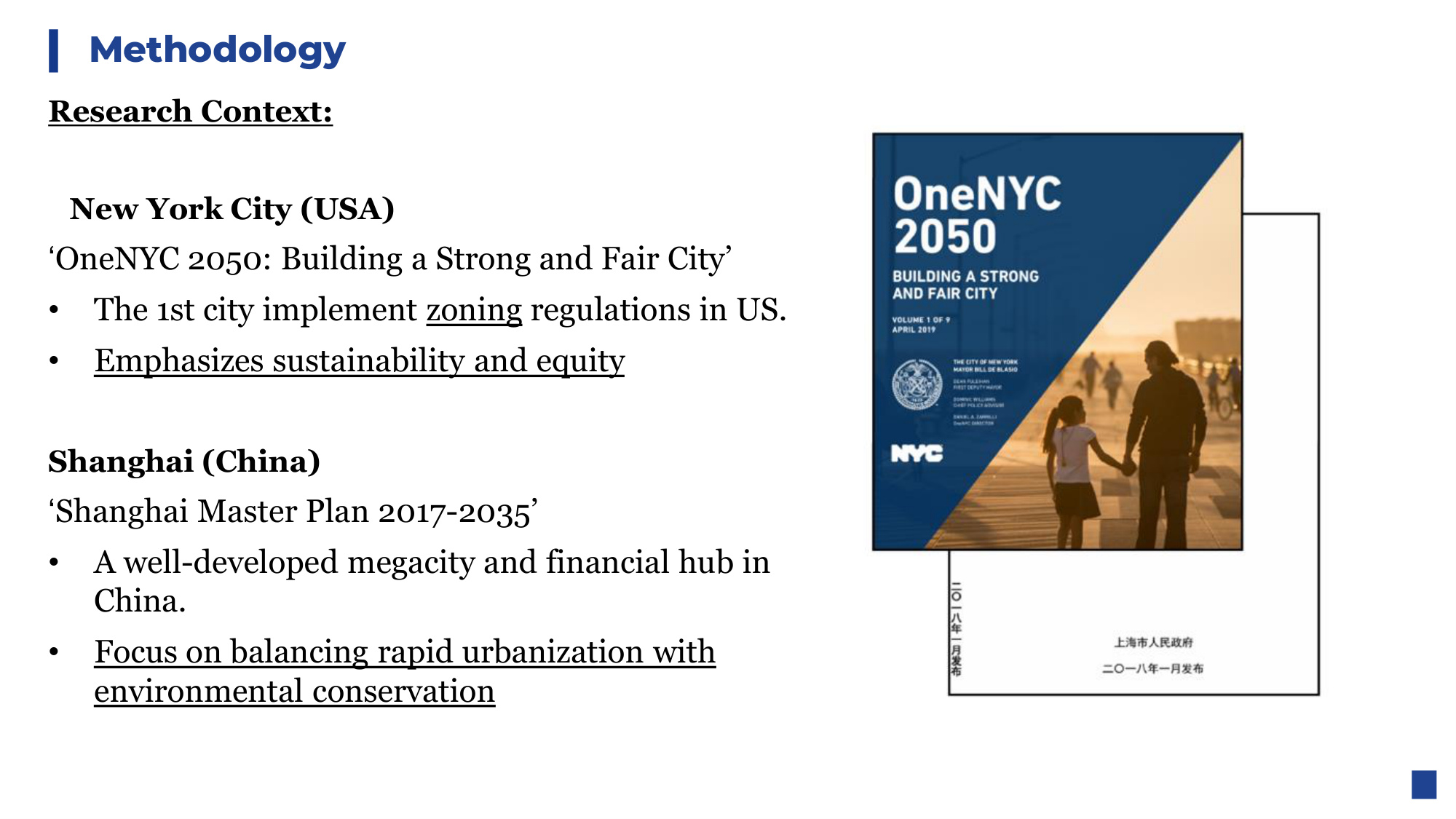
纽约和上海总体规划中气候变化适应的比较分析
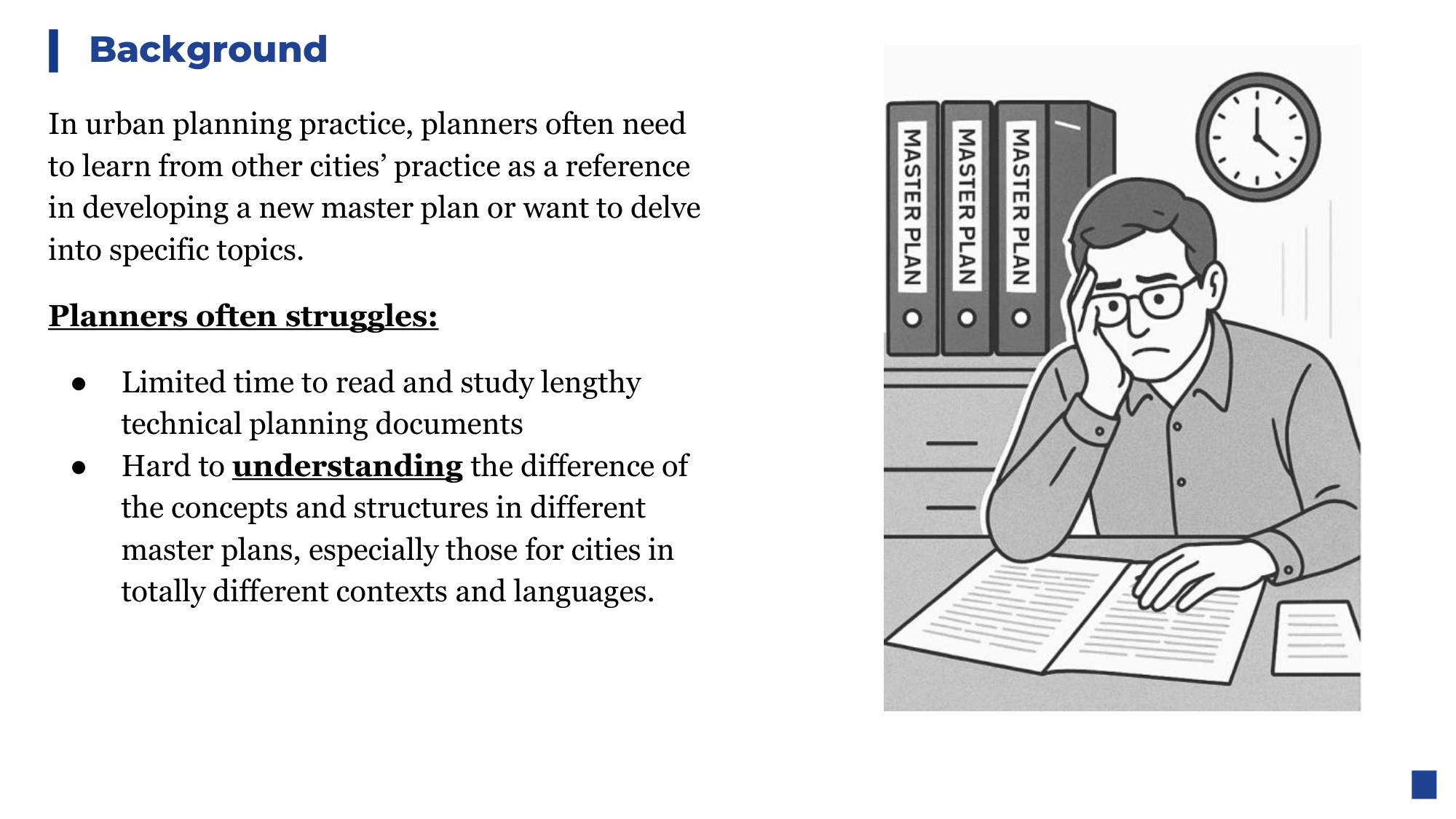
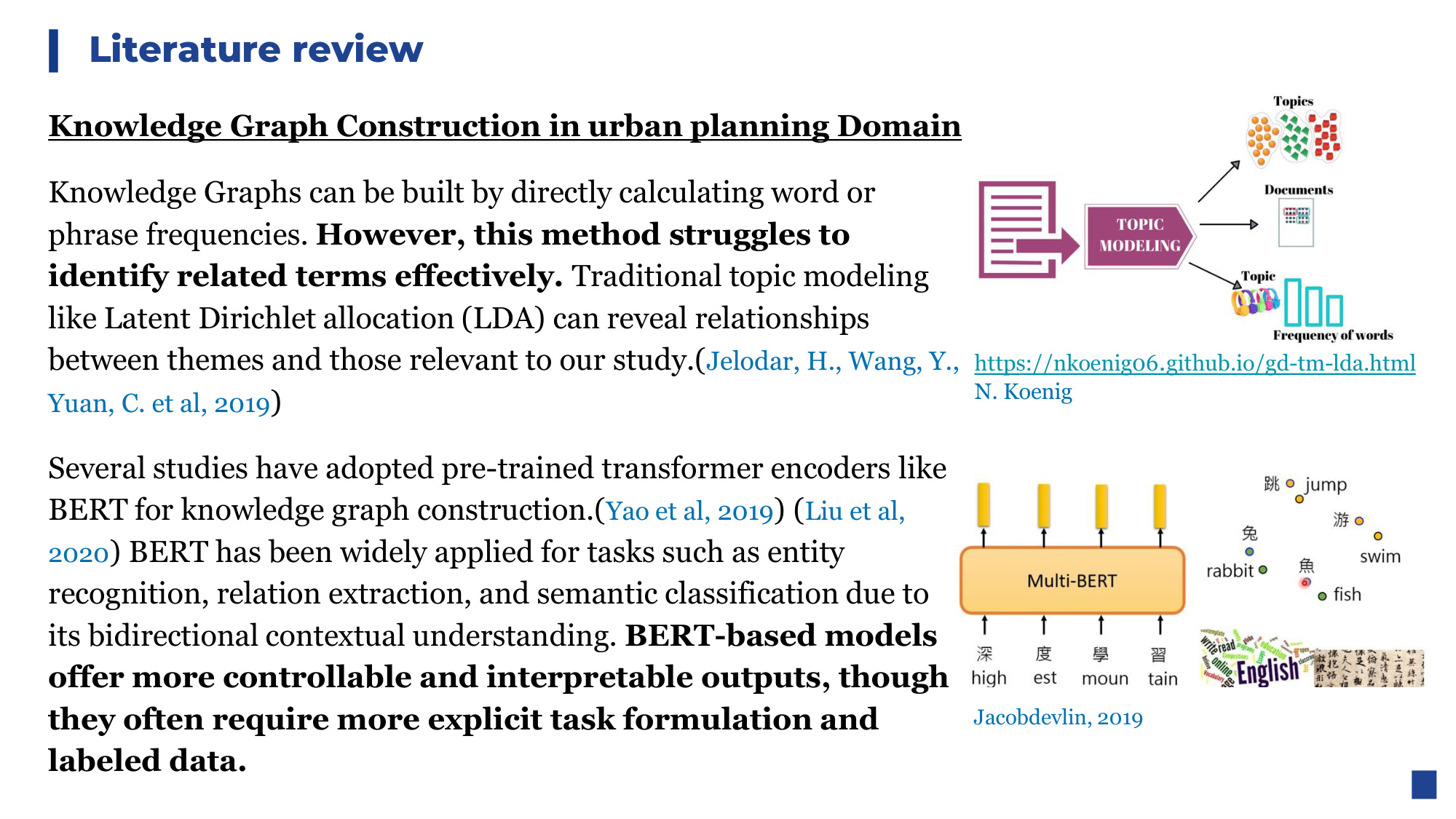
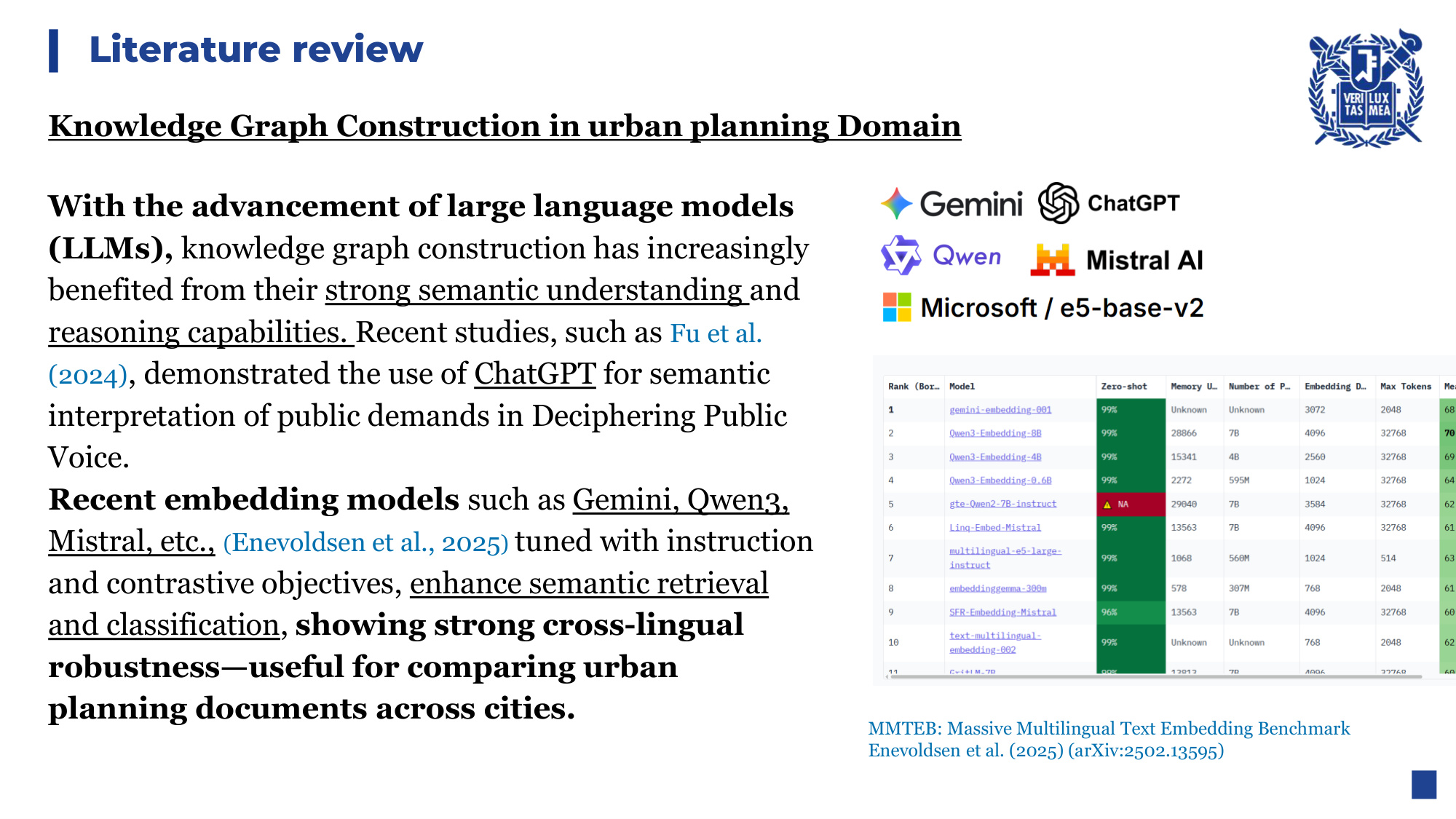
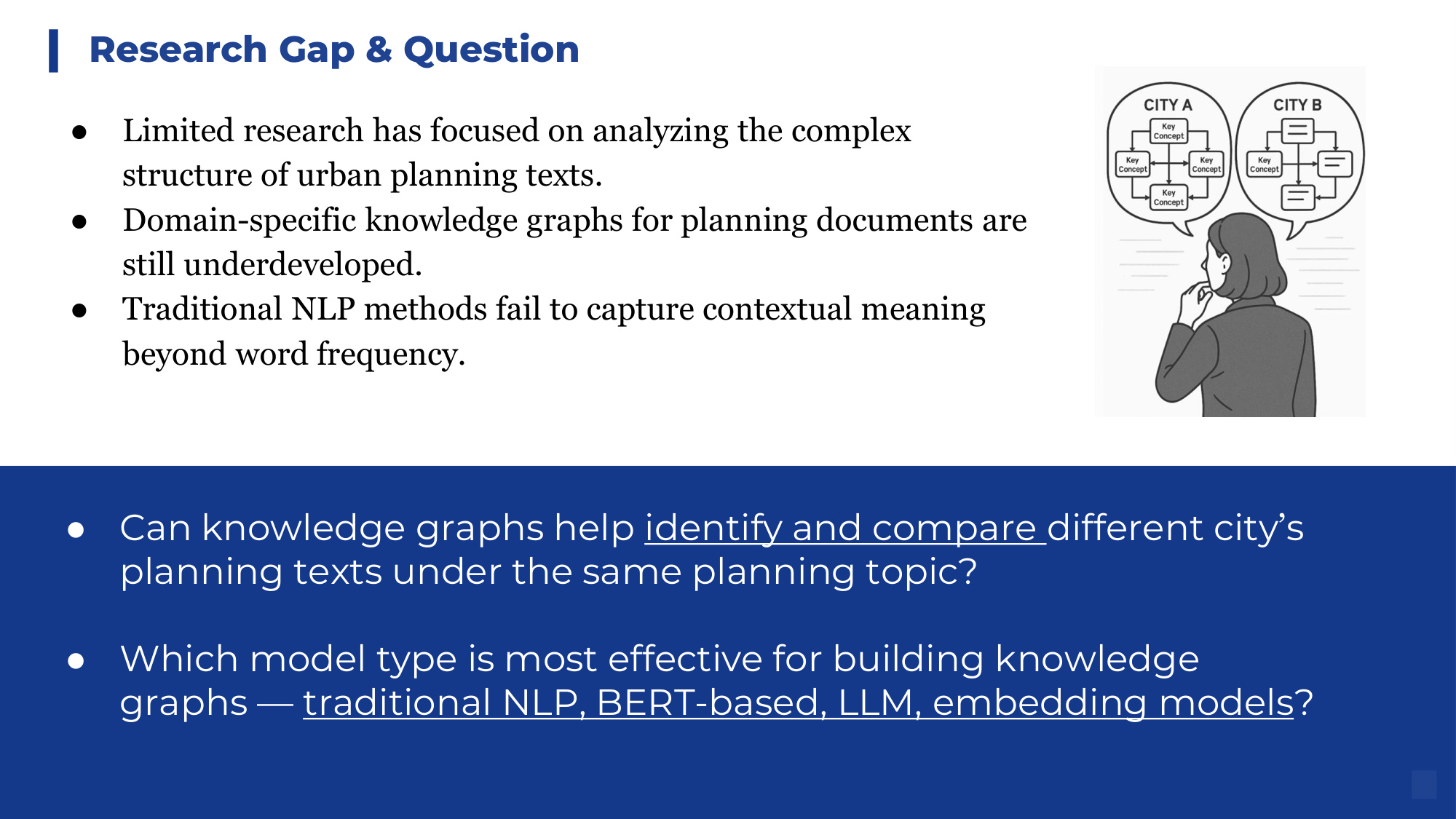
Urban planners often struggle to learn from other cities' master plans, especially when these documents are lengthy, context-specific, and written in different languages. These challenges are further compounded by diverse social, economic, and cultural contexts. This study addresses these issues by creating expertise-informed knowledge graphs (KGs) from master plans of New York City and Shanghai—two cities with distinct linguistic, cultural, and governance contexts. We define ten core concepts—five related to climate change adaptation and five to urban planning—based on expert knowledge, and apply both traditional natural language processing (NLP) methods and emerging large language models (LLMs) to generate and compare the edges connecting these nodes. The traditional methods include simple word frequency, TF-IDF, and conventional topic modeling, while the LLM-based method leverages the power of generative LLMs such as ChatGPT for semantic relationship extraction. Expert validation shows that while LLM-based methods capture nuanced relationships more effectively, their black box nature limits interpretability. To address this, we propose a hybrid LLM approach that integrates explainable NLP techniques (such as coexistence frequency and semantic similarity) and LLM-based topic modeling. The resulting KGs reveal the difference between the two master plans: New York prioritizes resilience and equity, while Shanghai emphasizes sustainable development and balanced urbanization. By comparing these KGs, we demonstrate the potential of the hybrid approach in facilitating knowledge sharing and policy adaptation across diverse urban contexts. This scalable framework can be applied globally to analyze urban planning documents, providing more context-sensitive adaptation strategies. Furthermore, it offers a foundation for future research to extend this methodology to additional cities or incorporate temporal changes, deepening insights into urban adaptation planning and fostering cross-city learning for climate resilience.
Expert validation reveals that while LLM-based methods capture semantic nuances more effectively, they often lack the interpretability crucial for practical implementation. Traditional natural language processing (NLP) techniques and generative large language models (LLMs) are then applied to generate and compare the edges connecting these nodes.